Foundational Data Science

Principal Investigator: Nisansa de Silva
The Foundational Data Science project investigates how systematic data acquisition, integration, analysis, modelling, and visualisation can be applied to real-world problems to generate reliable and actionable knowledge.
The Foundational Data Science project investigates how systematic data acquisition, integration, analysis, modelling, and visualisation can be applied to real-world problems to generate reliable and actionable knowledge. The project focuses particularly on research problems where meaningful insights can be obtained through carefully designed data-centric methodologies, without assuming that increasingly complex machine learning models necessarily provide better solutions.
A major research direction is the acquisition and construction of fit-for-purpose datasets from heterogeneous sources. These may include existing open datasets, public research repositories, government data, open APIs, surveys, sensor and log data, and ethically collected web data. Where individual datasets provide only a partial view of a problem, the project explores methods for integrating multiple sources while addressing challenges such as inconsistent schemas, missing observations, duplicate records, varying levels of data quality, and temporal or spatial misalignment.
The project studies the complete data science lifecycle, from problem formulation and data curation to exploratory analysis, statistical inference, predictive modelling, validation, and communication of findings. Depending on the research question, methods may include descriptive and inferential statistics, correlation and association analysis, hypothesis testing, classification, regression, clustering, time-series analysis, and pattern discovery. Particular emphasis is placed on selecting methods appropriate to the characteristics of the data and research question rather than introducing unnecessary model complexity.
Another central research theme is the role of visualisation in scientific discovery and communication. Exploratory visualisation is employed to reveal structures, anomalies, relationships, and potential hypotheses within data, while explanatory visualisation is investigated as a means of effectively communicating complex findings to researchers, policymakers, domain experts, and other stakeholders.
Across these research directions, the project emphasises data quality, reproducibility, transparency, ethical data practices, and rigorous empirical evaluation. The broader goal is to demonstrate how well-designed foundational data science methods can transform heterogeneous real-world data into reproducible scientific evidence and practically meaningful insights across diverse application domains.
Objectives:
- Develop high-quality research datasets through data acquisition, integration, preprocessing, and documentation from heterogeneous real-world sources.
- Apply rigorous data science methodologies including exploratory analysis, statistical inference, machine learning, and pattern discovery to investigate real-world research problems.
- Generate and communicate meaningful insights using exploratory and explanatory visualisation techniques to support scientific understanding and evidence-based decision-making.
- Advance reproducible and responsible data science research through transparent methodologies, systematic evaluation, ethical data practices, and reusable research artefacts.
Keywords: Machine Learning / Deep Learning | Natural Language Processing | Sinhala |
Publications
Preprints
Hesandi Mallawarachchi, Senilka Madurapperumage, Nadil Kulathunge, Thilokya Angeesa, Nethsith Gunaweera, Sandeepa Weerasekara, Patalee Narasinghe, Nisansa de Silva, and Sandareka Wickramanayake, "Forecasting Weather-Driven Price Dynamics Across Sri Lankan Tea Market Catalogues", arXiv preprint arXiv:2608.24894, 2026
Himath Dhanapala, Haren Daishika, Himandhi Kuruppu, Sithija Seneviratne, Ashini Kavindya, Patalee Narasinghe, Sandeepa Weerasekara, Nisansa de Silva, and Sandareka Wickramanayake, "Trilingual Topic Modeling of Sri Lankan Parliamentary Debates", arXiv preprint arXiv:2608.20365, 2026
Ruzaini Ahmedh, Yohan Jayasinghe, Tharumini Gamage, Ifaz Ikram, Hasini Lawanya, Nirasha Munasinghe, Patalee Narasinghe, Nisansa de Silva, and Sandareka Wickramanayake, "Monsoon Mayhem to Market Waves: Forecasting Fisheries Resilience in Sri Lanka", arXiv preprint arXiv:2608.04023, 2026
Dilusha Chandrasiri, Maneesha Herath, Yasith Hewarathna, Muditha Herath, Gishan Bandara, Madara Mendis, Nathali Athukorala, Nisansa de Silva, and Sandareka Wickramanayake, "How Environment and Urbanization Shape Bird Diversity in Sri Lanka", arXiv preprint arXiv:2607.00582, 2026
Sonath Kirindage, Vihanga Nimsara, Sakindu Rajapaksa, Kavyanga Hathurusinghe, Lahiru Dilshan, Subavarshana Arumugam, Nathali Athukorala, Sandareka Wickramanayake, and Nisansa de Silva, "Golden Hour Divide: Trauma Care Accessibility and Resource Vulnerability in Sri Lanka", arXiv preprint arXiv:2606.29889, 2026
Ranuga Weerasekara, Heshan Nethmina, Manuja Ranathunga, Vinma Wettasinghe, Dinithi Navodya, Subavarshana Arumugam, Nirasha Munasinghe, Nisansa de Silva, and Sandareka Wickramanayake, "When Prices Double in a Week: Forecasting of Agricultural Volatility in Import-Isolated Markets", arXiv preprint arXiv:2606.29248, 2026

Dhinanjaya Fernando, Dinura Ginige, Kalana Lakshan, Chanupa Gurusinghe, Lasana Pahanga, Subavarshana Arumugam, Sandeepa Weerasekara, Sandareka Wickramanayake, and Nisansa de Silva, "The Remittance Blueprint: Data-driven Intelligence for Sri Lanka", arXiv preprint arXiv:2606.28190, 2026
Ramanaish Abaiyan, Ruththiragayan Sutharsan, Kusal Amantha, Anusan Krishnathas, Asma Rauff, Kovindarajah Sriyathurshan, Patalee Narasinghe, Nirasha Munasinghe, Nisansa de Silva, and Sandareka Wickramanayake, "Fault of Our Stars: Behavioral Drivers of Rating-Sentiment Incongruence", arXiv preprint arXiv:2606.25518, 2026
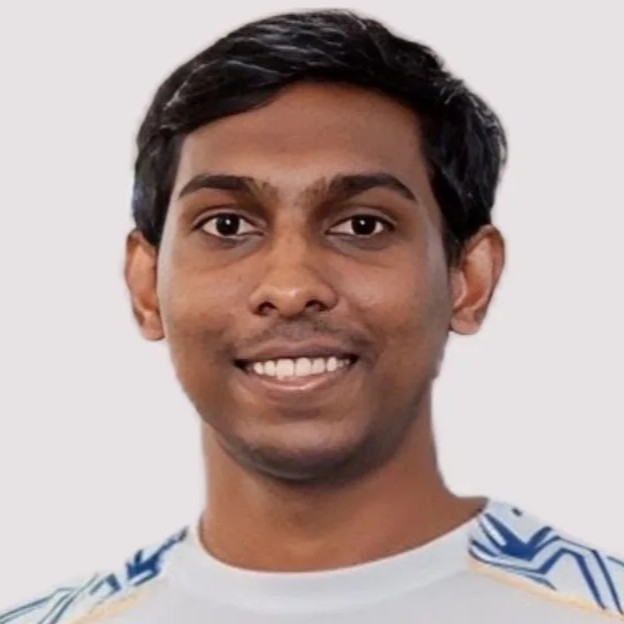
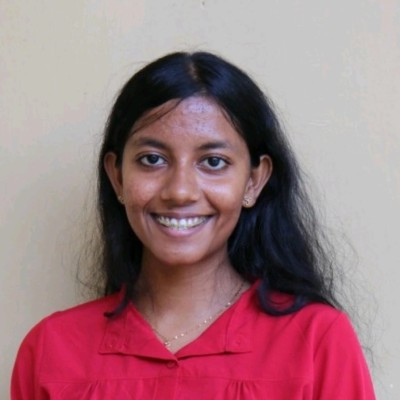
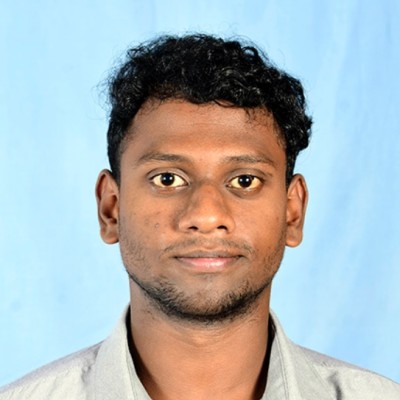
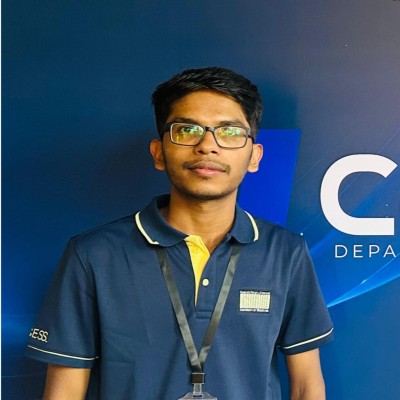
Team
External Collaborators: | Sandeepa Weerasekara | Sandareka Wickramanayake | Nirasha Munasinghe | Madara Mendis | Nathali Athukorala |